

What are the differences between powder packaging machines and granule packaging machines?
Although both powder packaging machines and granule packaging machines belong to solid material packaging equipment, they differ significantly in many aspects due to the substantial differences in their physical properties. Here is a detailed comparison:
Material Characteristics
Powder: The particles are extremely fine, prone to flying and caking, have poor powder packaging machines and granule packaging machines, and have a relatively low density (approximately 0.3-0.8g/cm³), requiring continuous external force to push them down evenly.
Granules: The particles are larger and have a definite size, have good powder packaging machines and granule packaging machines, are relatively stable, and have a higher density (approximately 0.8-1.5g/cm³), falling naturally under gravity.
Measurement/Discharging Methods
Powder Packaging Machine: Usually, screw propulsion for discharging (screw conveyor filling device) is adopted. It is driven by stepper motors or servo motors, and the amount of discharging is precisely controlled by adjusting the number of rotations (pulse count) of the motor. Weighing method (weight method) or volumetric cups can also be used.
Granule Packaging Machine: The discharging methods are more diverse powder packaging machines and granule packaging machines, including volumetric cups, vibrators, gravity flow, gate-type, multi-head weighing devices (combined scales), and counting method (particle counter). The adjustment methods are mostly mechanical.
Equipment Structure and Feeding Mechanism
Powder Packaging Machine: The core of the feeding mechanism is the screw + servo control system. It is controlled by a screen program to drive the servo for digital precise adjustment. Usually, a sealed structure is required.
Granule Packaging Machine: The feeding mechanism mostly adopts volumetric cups or vibration feeding, and the feeding amount is controlled by adjusting the extension of the cups or other mechanical methods. Commonly seen are vibration types, gate types, etc.
Dust Prevention and Sealing Requirements
Powder Packaging Machine: The dust prevention requirements are extremely high powder packaging machines and granule packaging machines. It needs to be equipped with a sealed filling area, dust cover, dust collection system, and even anti-static or dust removal devices to reduce dust flying, improve sealing, and reduce pollution risks.
Granule Packaging Machine: The dust prevention requirements are relatively lower because granules are less likely to generate dust.
Packaging Precision
Powder Packaging Machine: The precision is generally ±2-5%, relatively loose, because powder is susceptible to density changes, static electricity, and caking, etc.
Granule Packaging Machine: The precision can reach ±1-3%, relatively more strict, because granules have uniform density and good流动性, and the measurement is more stable.
Typical Application Scenarios
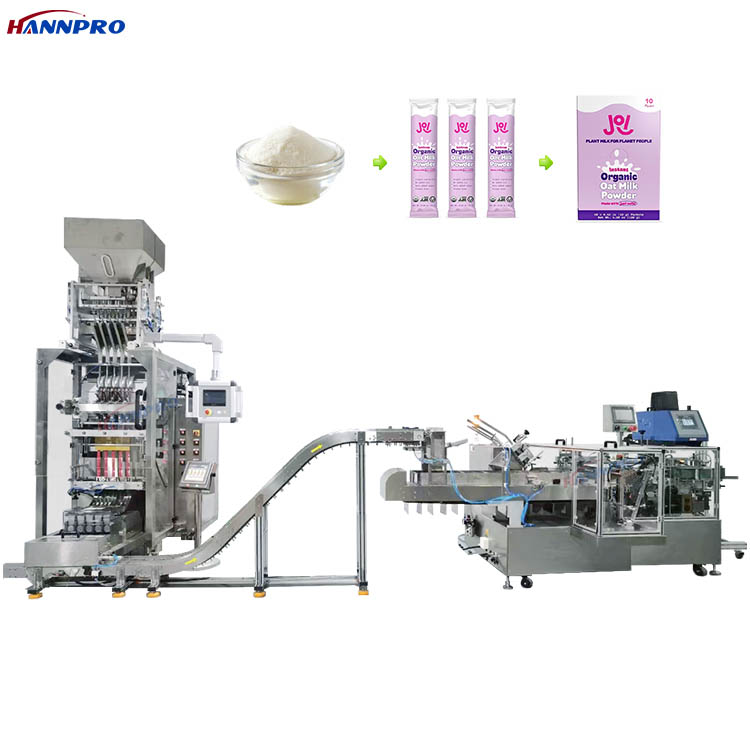
Powder Packaging Machine: Milk powder, flour, seasonings (five-spice powder, pepper powder), Chinese medicine powder, coffee powder, meal replacement powder, chemical powder, detergent, etc.
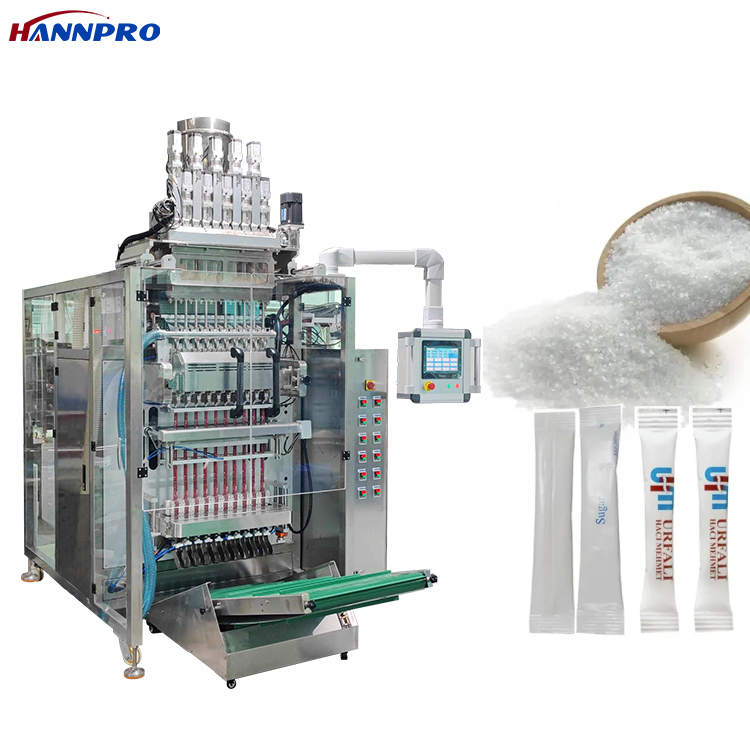
Granule Packaging Machine: Tablets, candies, nuts, coffee beans powder packaging machines and granule packaging machines, chicken essence, monosodium glutamate, sesame, powders, desiccants, seeds, etc.
Equipment Cost and Maintenance
Powder Packaging Machine: The equipment cost is relatively high (requiring a dust prevention system), and due to the tendency of powder to adhere and caking, it requires more frequent cleaning, calibration, and maintenance.
Granule Packaging Machine: The equipment cost is relatively lower, and the maintenance frequency is also lower.